

01. Background Behind the Attention on AI-Powered Manual Creation Tools
Why is the AI automation of manual creation such a hot topic right now? Let's first organize the background.
1-1. Manual creation is burdensome and tends to become dependent on specific individuals
A major reason why AI implementation is a hot topic is that manual creation is difficult to do manually. To create an internal manual, the person in charge, who is already busy with daily tasks, has to organize work procedures, write text, take screenshots of system screens, arrange the layout, and so on. Even creating just one manual requires a considerable amount of effort and a substantial block of time.
Also, manual creation tends to be left entirely to certain people who are knowledgeable about the work and capable. Many of you have probably experienced situations like "The manual updates have stopped because Mr./Ms. XX is busy."
Given this background, it is a very natural idea to think, "With AI, manuals can be created quickly, and anyone can produce something similar."
1-2. Speed is required in manual creation
In today's world, where cloud tools are frequently introduced and business processes are often changed, manuals also need to be dynamic and constantly updated. Taking a long time to carefully update a single manual or relying on the goodwill of individuals who "have time to do it" makes it difficult to keep up with this pace.
As the importance of a state where "anyone can know the latest correct procedures at any time" increases, AI, which can quickly process information, is regarded as one of the promising solutions.
1-3. The Evolution of AI is Expanding the Possibilities of Manual Creation
With the advent of large language models (LLMs), tasks such as text summarization, drafting outlines, translation, and even explaining procedures from images and videos can now be done with astonishing speed and accuracy.
The expectation that "using AI might reduce manual creation, which used to take weeks, down to minutes" seems to be driving the adoption of these tools. In fact, if AI is used appropriately, there is potential to reduce the workload involved in creation.
So, does AI really handle everything skillfully? Not quite. There are things it cannot do. To benefit from AI, it is important to correctly understand what AI can do and what is difficult for it. In the next chapter, we will organize these points.
02. How Much Can Manuals Be Automatically Created with AI?
Indeed, AI is a powerful tool, but it is not万能. AI has its strengths and weaknesses. If you do not fully understand these aspects, using AI for manual creation may result in something that feels "somehow different from what you expected."
2-1. What AI Can Do: Text Generation, Summarization, and Structure Assistance
AI excels at organizing and sorting scattered information.
・Creation of Table of Contents Proposals (Outlines): By simply inputting the task title or fragmented keywords, AI can generate a proposed table of contents for a manual. Especially for tasks commonly performed in any company, such as "How to process expense reimbursements," it can create highly accurate table of contents proposals.
・Rewriting and Summarizing Text: From rough notes or bullet-point based information written by on-site staff, it can create clear and polite explanatory text that is easy for others to read, or condense verbose explanations into concise summaries.
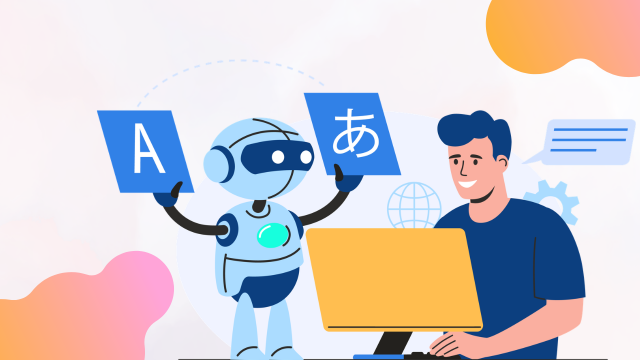
・Translation: Using AI, you can instantly translate into multiple languages.
・Procedure Extraction from Images and Videos: By using the latest multimodal AI, it is possible to automatically extract steps from recordings of operations and convert the operation explanations into text.
2-2. Difficulties for AI: Understanding Business Operations, Organizing Tacit Knowledge, and Ensuring Accuracy
On the other hand, AI cannot infer things that have not been instructed or produce outputs that are 100% correct.
・Understanding the Background and Context of Business Operations: AI cannot comprehend the purpose of the business, judgment criteria rooted in corporate culture, or policies for handling exceptional cases unless humans provide any information.
・Organizing Tacit Knowledge: Subtle tips known only to veteran employees and signs such as "this might lead to trouble later" cannot be output by AI unless humans put them into words and convey them to the AI.
・Output of Facts: AI sometimes produces content that differs from the facts, expressed in extremely natural language (hallucination). It can seem so plausible that you might be tempted to trust it, but the final fact-checking of AI-generated content must be responsibly conducted by humans.
Even when using AI for manual creation, it is necessary to properly understand the strengths and weaknesses of AI as described above and consider collaboration between humans and AI.
The next chapter explains the types of tools and how AI can be specifically utilized for manual creation.
03. Tools That Can Automatically Create Manuals Using AI
There are broadly three types of tools for creating manuals using AI.
It is important to choose the most suitable one according to your company's challenges and goals.
3-1. General-purpose Generative AI (ChatGPT, Claude, Gemini, etc.)
This type utilizes general-purpose LLMs (large language models) either directly or via API.
Advantages: Extremely flexible, allowing for adaptable output depending on the prompt. Supports multiple languages.
Disadvantages: Requires entering an appropriate prompt each time. Also, even with the same prompt, the output may not always be identical. Security considerations are also necessary.
Use Cases: Suitable when the manual’s framework already exists and the main goals are "text refinement" or "translation."
Recommended for companies like these:
• The manual quality is good, but they want to further refine the expressions
• They want to quickly multilingualize existing Japanese manuals
• They want to easily try out the effects of AI-generated text first
3-2. Manual-Specialized Creation Tools (Dedicated SaaS)
These are so-called manual creation tools with UI/UX specialized for manual creation and sharing.
Advantages: These tools package the necessary features for manual creation, such as templates for "Precautions" and "Key Points," version control functions, and image and video editing capabilities. Recently, some tools also include AI-assisted writing and proofreading support features. Even beginners can create high-quality manuals that follow established rules.
Disadvantages: In most cases, there are initial costs plus monthly fees, so costs can increase significantly with larger usage scales.
Recommended for companies like these:
• Manual creation is personalized, causing a heavy burden on specific individuals
• There are inconsistencies in the format and quality of manuals across departments, and you want to unify them
• You want to efficiently create and update a large volume of operation procedures and business manuals
3-3. Knowledge Sharing Platform Type Tools (Wiki, AI Search Integration Type)
This type allows you to manage internal Wikis and documents in one place and has strengths in AI-powered search.
Advantages: Since knowledge other than manuals (such as minutes of regular meetings and industry news articles) can also be managed on the same platform, it is highly versatile and can solve various questions in the field. Some include a chatbot that generates answers using AI from the created document collection by incorporating the RAG (Retrieval-Augmented Generation) mechanism, which is expected to reduce the time spent "searching" for knowledge.
Disadvantages: If information is not organized or structured and becomes cluttered, it becomes difficult to find the necessary information, and even if found, there are cases where the purpose of that information is unclear and it cannot be used. Additionally, in such cases, the accuracy of AI-based searches is also less likely to improve.
Recommended for companies like this:
• It takes time to find manuals and internal information, leading to decreased work efficiency
• Want to streamline FAQ systems and inquiry responses
• Want to promote cross-departmental knowledge sharing and effectively utilize company-wide knowledge
As mentioned above, there are plenty of options when it comes to incorporating AI into manual creation.
On the other hand, simply introducing AI does not necessarily guarantee successful manual creation. Indeed, if AI always writes clear sentences regardless of who uses the tool, it might seem that the quality of manuals would improve. However, if the quality standards required for the manual—such as writing rules and terminology definitions—are vague, AI tools will end up mass-producing "manuals that look plausible but have inconsistent writing styles and expressions, making them difficult to use."
So, what is important to maximize the effectiveness of introducing AI tools?
In the next chapter, we will explain two essential elements needed to create truly useful manuals.
04. Two Key Elements to Maximize the Benefits of Introducing AI Tools
As introduced in the previous chapter, there are various AI tools available to support manual creation. However, no matter how excellent the AI implemented is, many companies encounter the challenge of "not achieving the expected level of effectiveness" or "ending up with manual corrections by people, so the total workload does not change."
AI is essentially a device that operates according to the input information and instructions, processing at speeds unattainable by humans. To translate that speed into results, it is necessary to design the manual quality standards and creation process, and solidify the foundation for manual creation before introducing the tool.
4-1. Element ① Designing Manual Quality Standards
Even if you instruct AI to "make the text easy to understand" or "create a manual that can be used for a long time," what constitutes "easy to understand" and what qualifies as a "good manual" varies depending on the company and the nature of the work. If such quality standards are not shared within the organization, it becomes difficult to judge the quality of the AI-generated output. Furthermore, without standards, the extent to which individuals adjust the AI's output varies, leading to situations where "even though AI is being used, the process remains dependent on specific individuals..."
To avoid such situations, it is necessary to design the following items as quality standards and incorporate them into rules before introducing AI tools.
・Notation rules such as unifying polite language
・Which elements to include in the manual (procedures, cautions, supplements, etc.)
・Which format to use for each element
Having quality standards allows for an objective evaluation of AI output results, helping to avoid situations like "spending a great deal of time vaguely adjusting the manual generated by AI." Additionally, by presetting such quality standards in the AI, it becomes possible to create manuals more efficiently.
4-2. Element ② Designing the Manual Creation Process
Even if AI tools are introduced, if "when, who, and how to use the tool" are not decided, it becomes difficult to actually operate it on site. As a result, you might face a situation where "when you opened the lid, the tool was not being used." It is necessary to define a new process based on collaboration between AI and humans.
For example, consider the following points and try to outline a workflow.
・Who collects the information?
・When and who operates the AI tool?
・When, who, and based on what criteria do they review and adjust the AI’s output?
・What triggers the update of the created manual, and who performs it?
The above is also important when creating manuals without using AI. Whether manual operation is done manually or with AI, if you feel there are issues in manual management, please be sure to check whether these points are being addressed.
If you find yourself in a situation where "there is no time to create quality standards" or "you don’t know the optimal creation process for your company," consulting a manual creation expert is also an option. By entrusting professionals with the foundational rule design and the creation of "high-quality manuals" that serve as examples for AI to learn from and reference, you can smoothly get AI operations on track afterward.
|
Human Science can also assist with the design of quality standards and processes. Rather than providing general theories applicable to all companies, we review the manuals you have created and conduct interviews regarding how the manuals are used and their operational status, then propose the most suitable quality standards and process designs for you. We also provide development support for AI agents that standardize multiple manuals (rewriting them according to quality standards). We support everything from designing quality standards to developing AI agents and verifying accuracy in PoC. |
05. Two Important Factors to Maximize the Benefits of Introducing AI Tools
Human Science provides one-stop support from Japanese manual creation to English translation. We have a long history of handling numerous manuals since 1985. If you have needs such as the following, please feel free to contact us.
・Want to clearly improve existing Japanese and English manuals
・Considering creating English manuals and want to proceed step-by-step starting from Japanese manuals
・Want to translate Japanese manuals created in-house into English and utilize them
Feature ①: Extensive Manual Production Experience Centered on Large and Global Companies
Human Science has accumulated manual production experience across a wide range of fields, mainly in the manufacturing and IT industries. We have served prestigious companies such as Docomo Technology, Inc., Yahoo Japan Corporation, and Yamaha Corporation as our clients.
Manual Production Case Studies | Human Science
Feature ②: From Research and Analysis to Output by Experienced Consultants
The creation of business manuals is handled by Human Science’s proud, experienced consultants. Skilled consultants propose clearer and more effective manuals based on their extensive experience and the materials provided. It is also possible to create manuals from stages where information is not yet organized. The assigned consultant will conduct hearings and create the most suitable manual.
Manual Evaluation, Analysis, and Improvement Proposal Services | Human Science
Feature ③: Emphasis Not Only on Manual Creation but Also on Support for Adoption
Human Science focuses not only on manual creation but also on the important stage of “adoption.” Even after manual creation, we support the adoption of manuals through regular updates and manual creation seminars. Through a variety of measures, we assist in the effective utilization of manuals in the field.
Manual Creation Seminars | Human Science
Thank you for reading until the end. I hope this column provides you with useful hints for utilizing AI.